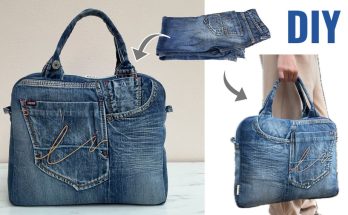
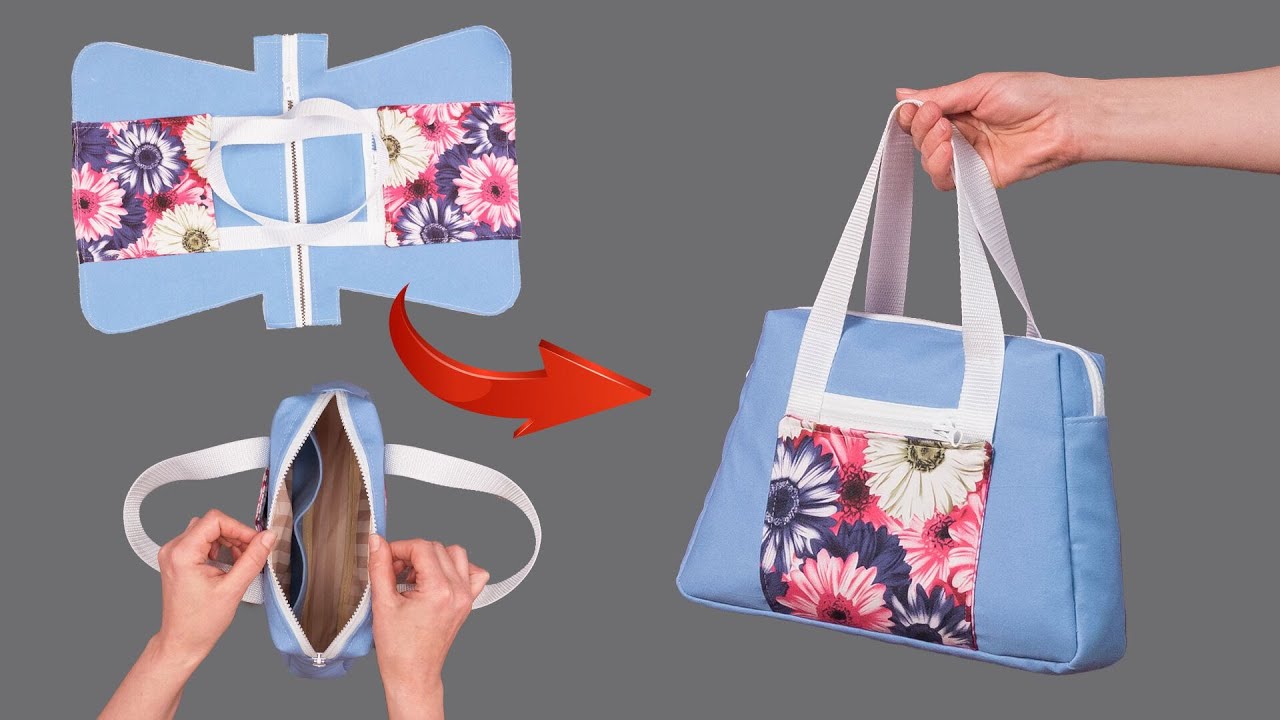
Sewing your own bag is the “gateway drug” of the crafting world. It is a high-reward, low-risk project that yields something you can actually use every day. To make a bag that looks “stylish” rather than “homemade,” the secret isn’t complex stitching—it’s structure and finishing.
This tutorial focuses on a Fully Lined Tote with Boxed Corners. This method hides every single raw edge of fabric inside the lining, giving you a professional result even if this is your first time sitting at a sewing machine.
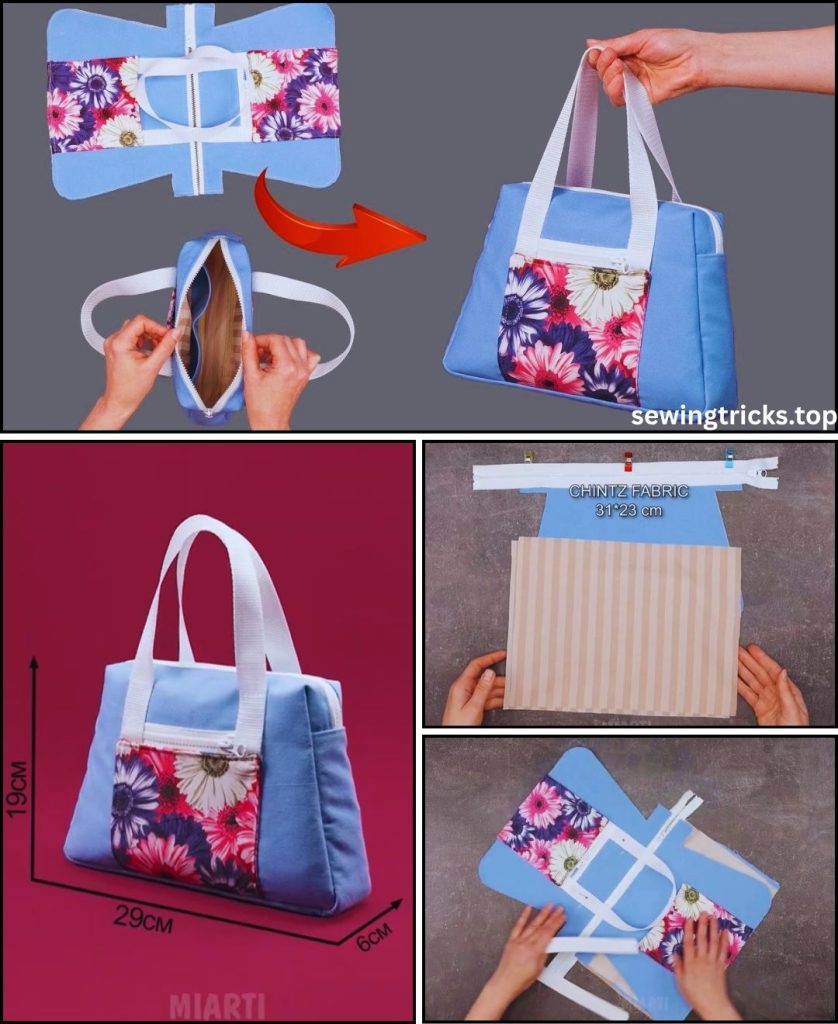
I. The Ingredients: What You’ll Need
To keep this simple but stylish, we are going to use pre-made webbing for the handles. Making fabric straps is a tedious process of folding and ironing that often ends up wonky for beginners. Webbing looks modern, clean, and takes five minutes.
1. The Fabric
- Outer Fabric (1/2 yard): Choose something sturdy like Canvas, Duck Cloth, or Denim. If you want a “wildcard” stylish look, try a heavyweight Upholstery Velvet or Corduroy.
- Lining Fabric (1/2 yard): A standard quilting cotton. Choose a bright pop of color or a fun pattern—it makes finding your keys much easier!
- Fusible Interfacing (1 yard): This is the “secret sauce.” It’s a thin layer you iron onto the back of your fabric to give it body. Without it, your bag will look like a floppy grocery sack. Use Pellon SF101 or a medium-weight fusible.
2. The Hardware & Tools
- Straps: 1.5 yards of 1-inch wide cotton or nylon webbing.
- Thread: All-purpose polyester thread.
- Tools: Sewing machine, fabric scissors (or a rotary cutter), pins (or sewing clips), an iron, and a ruler.
II. The “Pattern” (Simple Rectangles)
You don’t need to print anything. We are going to cut four identical rectangles.
| Piece | Quantity | Dimensions |
| Main Exterior | 2 | 15 inches wide x 16 inches tall |
| Lining | 2 | 15 inches wide x 16 inches tall |
| Interfacing | 2 | 15 inches wide x 16 inches tall |
| Straps | 2 | 25 inches long |
III. The Step-by-Step Process
Pro-Tip: A “Seam Allowance” is the distance between the edge of the fabric and your line of stitching. We will use a 1/2-inch seam allowance throughout.
1. Preparation (The Ironing Phase)
Lay your two exterior fabric pieces wrong-side up. Place the interfacing on top (bumpy/glue side down). Iron them together until they are fused. This takes your fabric from “limp” to “luxury.”
2. Attach the Straps
Take one exterior panel, right-side up. Measure 3.5 inches in from each side along the top edge. Place the ends of your webbing strap at these marks. The loop of the strap should be hanging down over the fabric.
- Baste them: Sew across the strap ends about 1/4 inch from the edge. This holds them in place so they don’t move during the big assembly. Repeat for the other panel.
3. Sew the “Buckets”
- The Outer Bucket: Place your two exterior panels Right Sides Together (RST). Pin the sides and the bottom. Sew down the left side, across the bottom, and up the right side. Leave the top open.
- The Lining Bucket: Do the exact same thing with the lining panels. CRITICAL STEP: Leave a 5-inch gap in the middle of the bottom seam. We need this hole to turn the bag right-side out later.
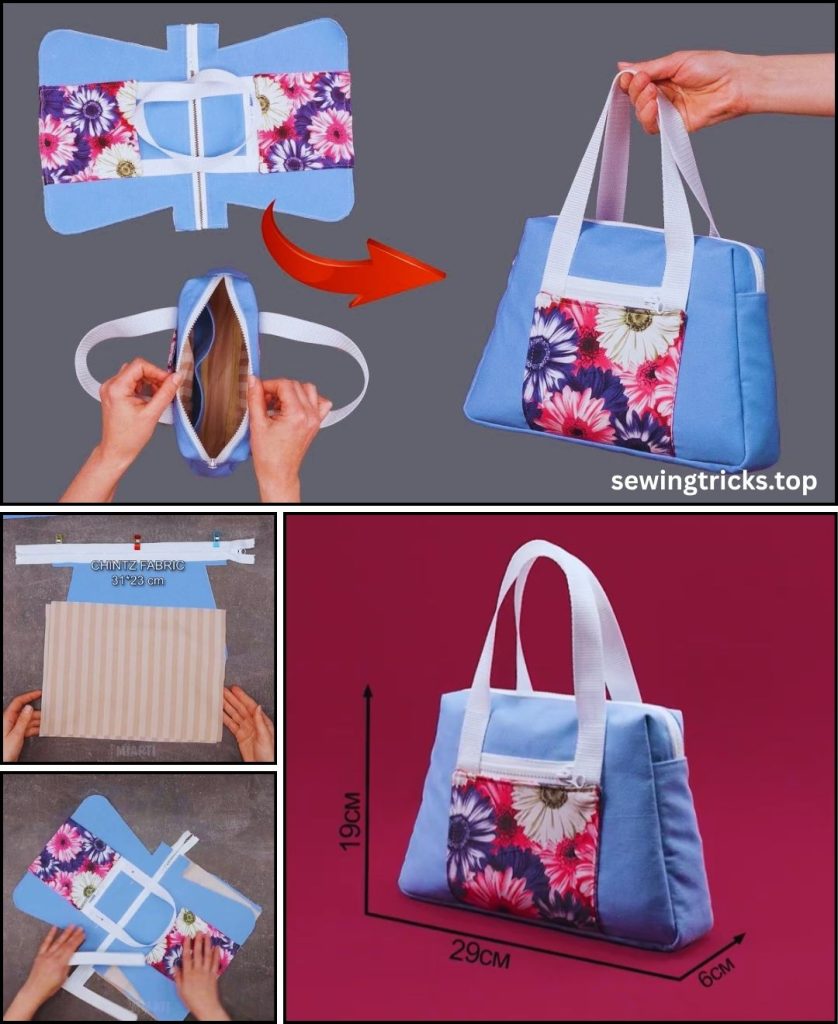
4. Create the “Boxed” Bottom (The 3D Magic)
To make the bag stand up, we need to give it a floor.
- With the bag still inside out, reach into a bottom corner.
- Pull the front and back fabric apart until the side seam and the bottom seam are touching. It should form a triangle “point.”
- Measure 1.5 inches down from the tip of the triangle and draw a straight line across.
- Sew along that line. Trim the excess triangle off.
- Repeat for all four corners (two outer, two lining).
5. The “Bag-in-Bag” Assembly
This is where the magic happens.
- Turn your Outer Bucket right-side out.
- Keep your Lining Bucket inside-out.
- Drop the Outer Bucket inside the Lining Bucket. The “pretty sides” of the fabric should now be touching each other.
- Tuck the straps down between the layers.
- Align the side seams and the top edges. Pin the entire circle of the top opening.
- Sew all the way around the top rim of the bag.
6. The Great Reveal
Reach through that 5-inch hole you left in the lining. Grab the exterior fabric and gently pull the whole bag through the hole. It will look like a wrinkled mess—don’t panic.
- Push the lining into the bag.
- Iron the top edge flat so it looks crisp.
- Topstitch: Sew one final line of stitching around the very top edge of the bag, about 1/8 inch from the fold. This keeps the lining from rolling out and makes the bag look store-bought.
IV. Troubleshooting & Final Touches
- Machine is “Thumping”: If your machine struggles with the thick denim/canvas, slow down. You can use the hand-wheel on the side of the machine to manually walk the needle through the thickest parts.
- Adding Style: Before you sew the two exterior panels together, you can sew a simple patch pocket to the front, or even add a “handmade” label.
- Closing the Hole: Don’t forget to sew that 5-inch gap in the lining closed! You can do this with a quick machine stitch or a hidden hand stitch.
Why this works: By using interfacing and the “bag-in-bag” method, you’ve created a structure that feels expensive. The webbing straps add a contemporary, industrial look that balances the softness of the fabric.
Would you like to know how to add an interior zippered pocket to this design, or should we stick to the minimalist look for now?